If you are looking at recreational or hunting land near Pauls Valley, it is easy to get excited by a pond, a tree line, or a promising aerial map. But the best land buys usually come from what you learn on the ground, not just what looks good online. When you know how to evaluate habitat, water, soils, access, and neighboring land use, you can make a more confident decision and avoid expensive surprises. Let’s dive in.
Start With the Pauls Valley Land Context
Land near Pauls Valley sits in a working agricultural area, not a purely recreation-driven market. According to the USDA’s 2022 Garvin County profile, the county includes 1,403 farms covering 428,025 acres, with pastureland making up the largest share of land in farms.
That matters because many properties in this area are shaped by cattle, hay, cropland, and other active agricultural uses. When you evaluate a tract, you should think beyond the boundary lines and consider how neighboring operations may affect access, fences, wildlife movement, and everyday enjoyment.
Look Beyond the Aerial Map
Aerial photos are useful, but they do not tell the whole story. A tract that looks balanced from above may have weak cover, poor drainage, heavy brush encroachment, or access limitations that only become clear once you walk it.
The Oklahoma Department of Wildlife Conservation says wildlife needs four basics: food, water, cover, and space. That framework is a practical way to judge whether a property near Pauls Valley has real recreational or hunting value, or just visual appeal.
Check the Habitat Mix
For deer-oriented land, a good property usually offers more than scattered trees and open grass. ODWC notes that white-tailed deer prefer open woodland, use established travel paths, and rely on heavy cover for fawning and bedding.
Useful cover can come from native grass, brushy pockets, blown-down timber, or managed bedding areas. ODWC’s guidance on managing deer bedding areas also points out that eastern redcedar can crowd out native habitat, which can reduce long-term wildlife quality if the tract is not actively maintained.
Evaluate Water Features Carefully
Water often catches a buyer’s eye first, especially in a market where local recreation matters. Pauls Valley Lake is one of the area’s best-known water features, with the city and ODWC promoting opportunities for boating, fishing, camping, and regulated hunting. ODWC identifies Pauls Valley Lake as a local resource just northeast of downtown, while OWRB data cited in the same context notes about 750 acres of water and 8.2 miles of shoreline.
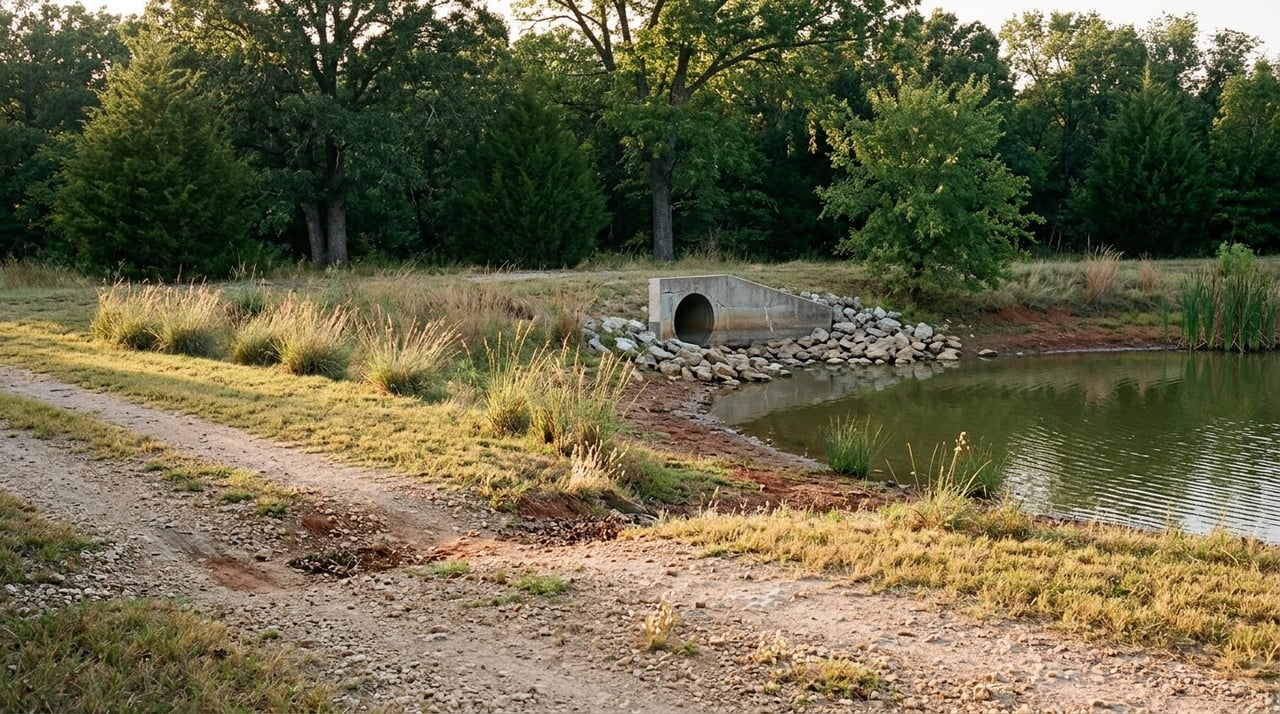
That local appeal can make water-oriented tracts especially attractive. Still, if a property has a pond, creek, wet area, or low ground, treat it as a feature to inspect closely rather than a value add you simply assume is functional.
For waterfowl or mixed-use recreation, shoreline shape, vegetation, and freshwater conditions matter. ODWC notes that mallards use many wetland habitats, but not every wet spot is productive, manageable, or legally alterable for hunting purposes.
Study the Soils Before You Make an Offer
Soils can tell you as much about a property as the fence line or pond count. In Garvin County, the Garvin soil series description highlights deep, very slowly permeable alluvial and floodplain soils that can flood briefly.
That is an important clue for buyers near Pauls Valley. Some tracts may appear flat, usable, and wildlife-friendly from the air, but still have seasonal wetness, drainage problems, or access issues that affect how you use the land.
Use Web Soil Survey Early
One of the best due diligence steps is running the property through the NRCS Web Soil Survey. NRCS identifies it as the current official source of soil survey information, and it can help you map a tract and review soil ratings for a defined area.
If you are comparing multiple properties, this step can help you sort out which one may better support your goals. It is especially useful when you want a clearer picture of drainage, seasonal limitations, or whether an attractive bottom area may come with tradeoffs.
Confirm Access and Boundaries
Access is one of the first things to verify on recreational and hunting land. A pretty tract loses value fast if getting in and out is difficult, uncertain, or dependent on informal neighbor arrangements.
ODWC’s general hunting regulations make it clear that hunters must have permission to enter posted or occupied land or land primarily devoted to farming, ranching, or forestry. For buyers, that makes deeded access, easements, gate control, and clear boundary lines essential parts of due diligence.
Pay Attention to Neighboring Uses
Because Garvin County is strongly tied to agriculture, nearby uses often include cattle, hay production, and cropland. Those neighboring patterns can shape your experience on the property in practical ways.
You should evaluate fence condition, farm traffic, seasonal activity, and whether neighboring management supports or limits wildlife movement. A tract does not exist in isolation, and a smart buyer views the surrounding landscape as part of the purchase decision.
Match the Property to Your Goals
Not every tract needs to be a large-scale deer management property to be a good buy. In fact, many smaller properties near Pauls Valley may be better suited to family recreation, fishing, seasonal hunting, and general enjoyment than to an intensive wildlife-management plan.
ODWC’s landowner programs are a helpful reminder that management options vary by size and purpose. The department offers free technical assistance statewide, and some programs can help landowners think through habitat conditions and improvement needs.
Understand Management Scale
If your goal is serious deer management, acreage matters. ODWC’s Deer Management Assistance Program requires at least 1,000 acres, although smaller tracts can combine with adjoining land.
That does not mean smaller parcels lack value. It means your plan should fit the scale of the property. On many Pauls Valley-area tracts, the best long-term use may be low-maintenance recreation, light habitat work, fishing, bird watching, or weekend family use.
Ask Whether the Land Can Be Improved
A tract’s long-term value is not just about what is there today. It is also about whether you can maintain and improve it without creating major cost or regulatory headaches.
ODWC explains that prescribed burning is one of the most effective tools for improving wildlife habitat, especially where woody invasion such as cedar is reducing native plants and cover. If a property has brush encroachment, invasive grasses, or declining habitat, ask whether realistic management tools are available and practical for that site.
Review Wetland and Habitat Programs
For properties with wet areas or habitat potential, private-land resources may be worth exploring. The Oklahoma Wetlands Program notes that more than 85% of the state’s wetland acres are on private land, and ODWC’s Partners for Fish & Wildlife information describes technical and financial help for some restoration work.
That support can be valuable, but you should still verify whether a wet area is huntable, manageable, and legally alterable before assigning premium value to it. A feature that looks like duck habitat on paper may not perform that way in practice.
Do Improvement Due Diligence Early
If you expect to add roads, improve drainage, clear brush, or work on ponds, start that research before closing. Habitat projects can involve more than equipment and labor.
The U.S. Fish & Wildlife Service Oklahoma Project Review process helps identify federally listed species, critical habitat, and other trust resources in the project area. Checking that early can help you avoid spending time and money on plans that may require additional coordination.
Think About Long-Term Resale
A recreational tract is still a real estate investment, even if your main goal is personal use. In many cases, the land that holds appeal best over time is the land that offers practical access, a balanced habitat mix, usable water, and manageable upkeep.
ODWC notes that deer hunting has more than $600 million in annual economic impact in Oklahoma. That broader demand helps explain why properties with legal access, useful habitat, and realistic management potential often have stronger resale durability than parcels that rely on acreage alone.
If you are evaluating recreational and hunting land near Pauls Valley, the smartest move is to look at the whole picture. Water, cover, soils, access, neighboring land use, and management potential all work together to shape how a property performs now and how it may hold value later. If you want local guidance on acreage in central and south-central Oklahoma, connect with Matthew Cunningham for a practical, boots-on-the-ground perspective.
FAQs
What should you inspect first on hunting land near Pauls Valley?
- Start with access, boundaries, water, habitat mix, and soils, then walk the property to confirm what aerial maps do not show.
How important are soils when buying recreational land in Garvin County?
- Soils are very important because some local soil types can have slow permeability, flooding risk, or drainage limits that affect use and access.
Can a small tract near Pauls Valley still be a good recreational property?
- Yes, smaller tracts can work well for family use, fishing, light hunting, and general recreation if the land matches your goals.
What makes a pond or wet area valuable on rural land near Pauls Valley?
- Value depends on water reliability, shoreline condition, vegetation, usability, and whether the area can be legally and practically managed.
What land management help is available for Oklahoma property owners?
- ODWC offers free technical assistance statewide, and some programs may also provide support for habitat planning, wetland work, or wildlife improvements.