Two items sat back to back on the Pauls Valley City Council agenda one Tuesday evening in late January. The first was a branding proposal: a name and a logo for downtown, four blocks wide, built around the city's railroad history and its brick streets. The second was a rezoning request for a property at 601 N. Butler Road, changing it from A-1 agricultural to C-5 commercial. Nobody in that room seemed to think the two items were related. They are, and if you're weighing a purchase in or near downtown Pauls Valley, the relationship between them matters more than the name on the sign.
What the council actually approved
The name is Brick & Rail District. Tourism Director Tawni Huggans described it as work meant to reflect "the heart and spirit of our community," rooted in the city's railroad history and its brick downtown, and framed it as a way to support local business investment and give downtown a unified identity for marketing and events. Council members Bonnie Meisel, Amy Richey, Kahn Nirschl and Jonathan Grimmett voted in favor. Mayor Jocelyn Rushing wasn't at the meeting.
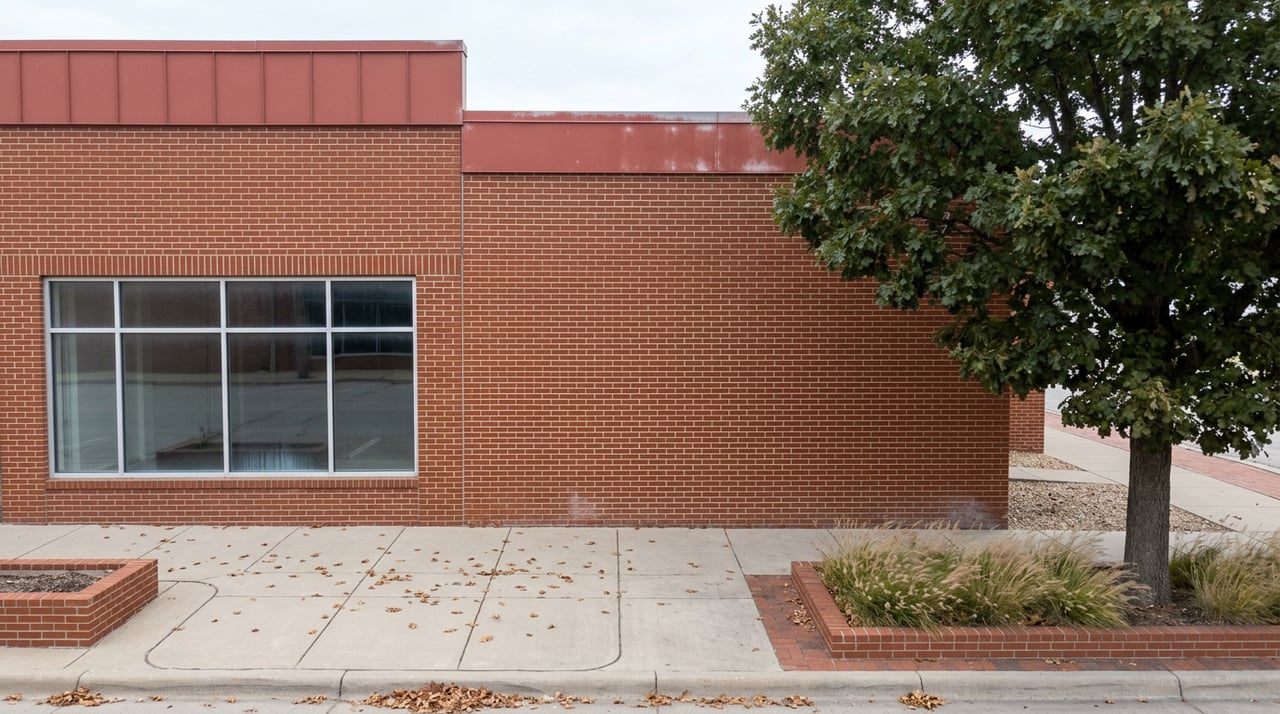
The district itself, as a zoning designation, was actually established the summer before, covering roughly four blocks of downtown. What happened in January was branding on top of a boundary that already existed on paper. A name, a logo, a marketing frame. Useful for tourism. Useful for a chamber newsletter. Not, on its own, a change to what you can build, lease, or operate on any specific lot.
The item right after it
That's what makes the second agenda item worth reading closely. The property at 601 N. Butler Road had operated as a business for years, most recently as a medical marijuana dispensary. Assistant City Manager Mark Norman told the council the zoning had simply never been updated from its default agricultural designation, despite multiple businesses running there over time. The council fixed it that night with a straightforward A-1 to C-5 change.
Read those two votes together and you get the actual lesson. A parcel can carry a commercial business on it for years while its underlying zoning still says farmland, and nobody notices until someone finally files the paperwork to make the record match reality. The city didn't discover this because of a complaint or a dispute. It came up as routine housekeeping, the kind of gap that sits quietly in county and city records until a sale, a loan application, or a new tenant forces someone to actually pull the file.
What this means if you're looking at downtown-adjacent property
If you're comparing an in-town lot near the new district against a suburban option or a piece of acreage outside city limits, the Brick & Rail District name is going to show up in your research. It should. It's real, it's official, and it's the story downtown is actively telling about itself right now. But the name describes an area. It does not describe your parcel.
Here's the distinction worth holding onto: the branded district is a marketing and planning boundary, roughly four blocks, meant to unify how downtown gets promoted and developed. The zoning code is a parcel-by-parcel legal record that determines what you're actually allowed to do with a piece of property, and it can lag behind reality for years, as it did at 601 N. Butler Road. Being inside the district's boundary tells you the city has plans for the area. It doesn't tell you what your specific lot is zoned for today.
Before you write an offer on anything downtown or downtown-adjacent in Pauls Valley, a few things are worth confirming directly rather than assuming from the branding:
- Pull the current zoning designation for the specific parcel, not the block or the district. City hall and the Garvin County Assessor's office can both confirm this.
- Ask whether the parcel sits inside the four-block Brick & Rail District boundary or just nearby. Adjacent isn't the same as included.
- Check whether the current or most recent use of the property matches its filed zoning. A business operating there now is not proof the zoning was ever updated to match.
- Ask about "phase two." Huggans told council the next step is to "align this vision with the city's strategic plan, introduce those revitalization renderings, pursue grant funding, and continue building momentum for a stronger, more connected downtown." That's a real plan, but as of the January meeting it didn't come with a funded timeline. Don't price a purchase around improvements that haven't cleared a grant application yet.
- If a rezoning is pending on a property you're interested in, ask when it's scheduled for council and whether it's contested. The Butler Road change was uncontroversial. Not every rezoning is.
The district is also, genuinely, doing things
None of this is a knock on what's happening downtown. The momentum is real and it's dated, not aspirational. This year's Okie Noodling Tournament, held downtown in June, partnered for the first time with the Pauls Valley Animal Welfare Society for a Dog Jog and 5K the morning of the event, with vendor booths and pet activities set up in Santa Fe Depot Park. BrickFest is scheduled for September 26, 2026, one of the city's longstanding downtown festivals. These are the kinds of events that fill sidewalks and build the case for the district's name. They're evidence the branding has something to stand on.
But foot traffic on festival weekends and a formal zoning designation are two different kinds of proof, and only one of them shows up on a title report. A district that draws a crowd for the Okie Noodling Dog Jog is a district worth investing in. It's not, by itself, a district where every parcel is guaranteed to carry the zoning a buyer assumes it has.
What the two agenda items tell you together
A name change is fast and cheap. A logo gets approved in one meeting. Updating a parcel's actual zoning designation, as Butler Road shows, can sit unaddressed for years even while a business operates there in plain view. That gap between the story a place tells about itself and the paperwork that governs it isn't unique to Pauls Valley, but it's rarely this visible in a single council packet. If you're evaluating property near a branded district anywhere, the branding tells you where the momentum is. The zoning file tells you what you're actually buying.
A few quick questions before you sign
Does being inside the Brick & Rail District mean my property is zoned commercial? Not automatically. The district is a roughly four-block designation tied to tourism and development planning. The zoning on your specific parcel is a separate record that needs to be checked independently, the same way the city discovered the Butler Road property was still zoned agricultural despite years of commercial use.
How do I check the zoning on a specific downtown parcel? Contact Pauls Valley city hall directly, or review the Garvin County Assessor's parcel records. City council meeting packets, which are public, are also worth scanning for any pending rezoning requests tied to a property you're considering.
When will the "phase two" revitalization plans actually happen? As of the January 2026 council meeting, phase two was described as aligning with the city's strategic plan and pursuing grant funding, without a confirmed timeline. Treat any downtown improvement plans as directional until funding and a schedule are formally approved.
Whether you're weighing a storefront near Santa Fe Depot Park or a home a few blocks outside the district boundary, the questions are the same: what's the parcel actually zoned for today, and what's changing that's already funded versus what's still a plan on paper. Cross C Realty works these details for clients across Purcell, Norman, Pauls Valley and the surrounding area every day. Reach out for your Free Market Report and a straight answer on what a specific property in Pauls Valley can actually do.